
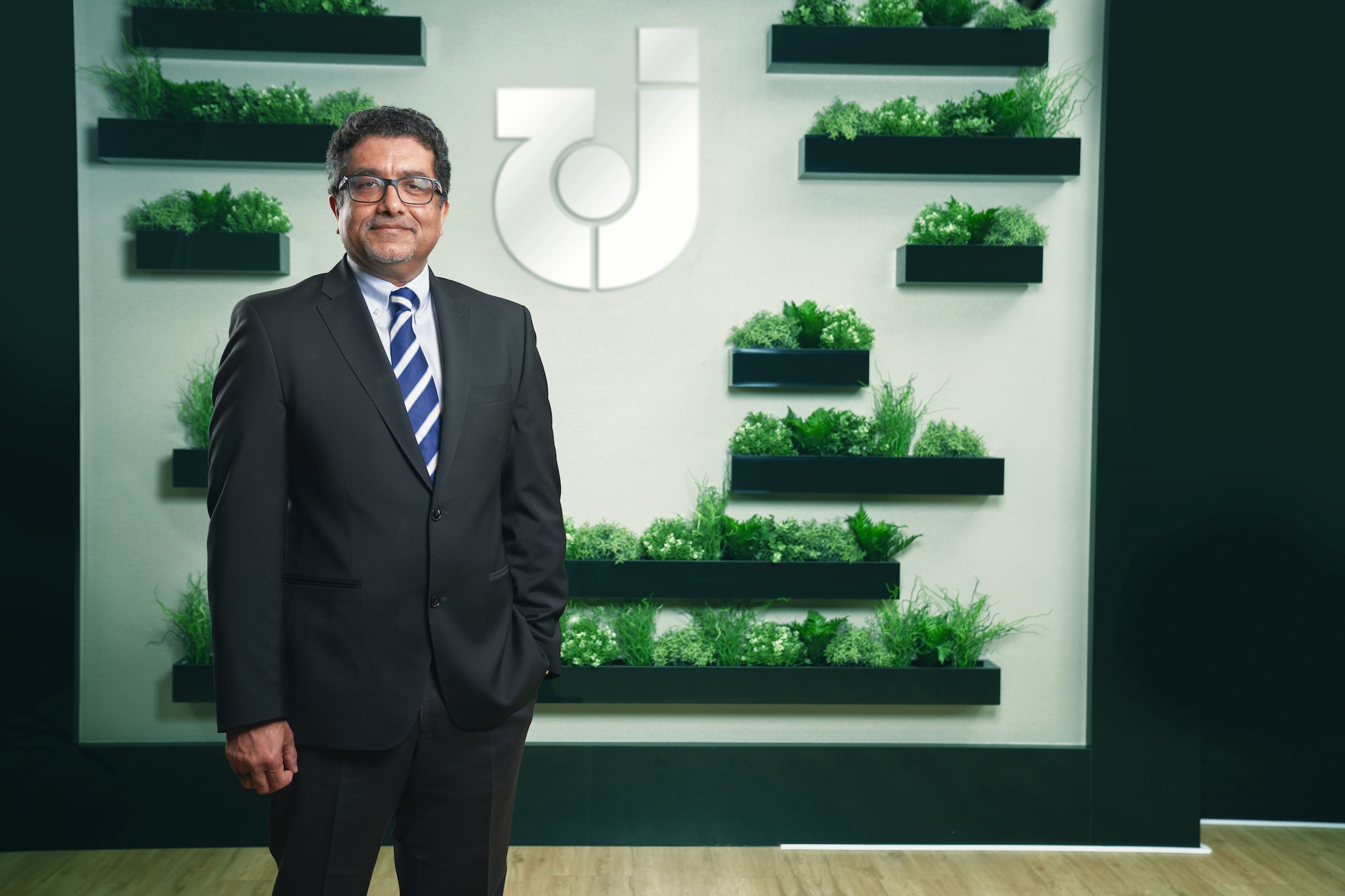
1. You have been with Juffali Automotive Company (JACO) for nearly three decades. How has your leadership philosophy evolved throughout your journey from joining the company in 1996 to becoming CEO?
My journey with Juffali Automotive Company has been defined by continuous learning, adaptation, and a deep appreciation for the role mobility plays in people’s lives and in the Kingdom’s development. Having joined JACO in 1996, I have had the privilege of contributing to the company through multiple leadership roles across different areas of the business, each of which provided valuable insights into our customers, operations, partners, and the broader automotive ecosystem.
Over the years, my perspective on leadership evolved from a strong focus on commercial performance and operational excellence to a broader understanding of what creates sustainable success. I came to appreciate that long-term growth is built not only through business results, but also through customer experience, talent development, strategic partnerships, innovation, and an organization’s ability to adapt to change.
One of the most influential aspects of this journey has been witnessing Saudi Arabia’s remarkable transformation. As the Kingdom accelerates toward Vision 2030, companies are increasingly expected not only to deliver commercial success, but also to contribute meaningfully to national priorities and long-term economic development. This has reinforced my belief that leadership is ultimately about creating sustainable value, empowering people, and ensuring organizations remain relevant and resilient in a rapidly evolving world.
My experience across different leadership positions within JACO provided exposure to every stage of the customer journey and many facets of the business. It reinforced the importance of operational excellence, customer centricity, innovation, and building strong partnerships.
Leading through periods of market evolution, technological disruption, and changing customer expectations also taught me that successful leadership is not about reacting to change, but about preparing organizations to thrive through it.
Today, my leadership philosophy is centered on strengthening JACO’s position as a future-focused mobility leader while preserving the principles that have guided the company for decades: excellence, innovation, customer focus, long-term value creation, and a commitment to contributing to the Kingdom’s continued progress.
2. Under your leadership, JACO has significantly expanded its mobility ecosystem. What strategic priorities have been most critical in driving this transformation?
The most important shift has been our transition from being perceived primarily as an automotive distributor to becoming a comprehensive mobility solutions provider.
More broadly, our ambition has been to build a mobility ecosystem that creates value beyond the vehicle itself, one that connects products, services, infrastructure, technology, and customer experiences into a single integrated proposition.
This transformation has been guided by three strategic priorities. First, diversifying our mobility offering to better serve evolving customer needs through new business lines and integrated services. Second, preparing the company for the future of mobility by investing in electrification, digital transformation, and sustainable mobility solutions. Third, strengthening customer lifetime value through an integrated ecosystem that combines sales, aftersales, protection solutions, rental services, fleet support, and future mobility offerings.
Over the past few years, we have expanded our portfolio through initiatives such as Juffali Rental Company, ProTech® Monte Carlo, the introduction of the smart brand, and the expansion of commercial vehicle solutions through Mercedes-Benz Vans. These initiatives are not standalone businesses; they are interconnected components of a broader mobility ecosystem designed to provide customers with a seamless experience throughout their mobility journey.
Our objective is simple: to ensure that JACO remains relevant not only for today’s mobility needs, but also for the future mobility landscape that Vision 2030 is helping to create.
3. Saudi Arabia’s automotive sector is undergoing rapid change. Where do you see the Kingdom’s premium mobility market heading over the next five years?
I believe Saudi Arabia is entering one of the most exciting periods in the history of its automotive sector. The premium mobility market will increasingly be shaped by three major forces: electrification, digitalization, and customer-centric experiences.
These forces are not developing independently; they are converging to redefine how customers interact with mobility brands and how value is delivered across the ownership journey.
Customers today expect much more than a vehicle. They seek integrated experiences, seamless digital engagement, personalized services, and brands that align with their lifestyle aspirations. At the same time, we are witnessing growing interest in sustainable mobility solutions and next-generation technologies.
Saudi Arabia’s unique advantage lies in the pace of transformation driven by Vision 2030. Significant investments in infrastructure, tourism destinations, and sustainability initiatives are creating an environment where mobility innovation can thrive.
Over the next five years, I expect the premium mobility market to move beyond traditional ownership models toward a more connected ecosystem where vehicles, digital services, infrastructure, and lifestyle experiences are seamlessly integrated.
For companies like JACO, this presents a tremendous opportunity, not only to participate in this transformation, but to help shape it by delivering innovative, future-ready mobility solutions that contribute to the Kingdom’s long-term ambitions.
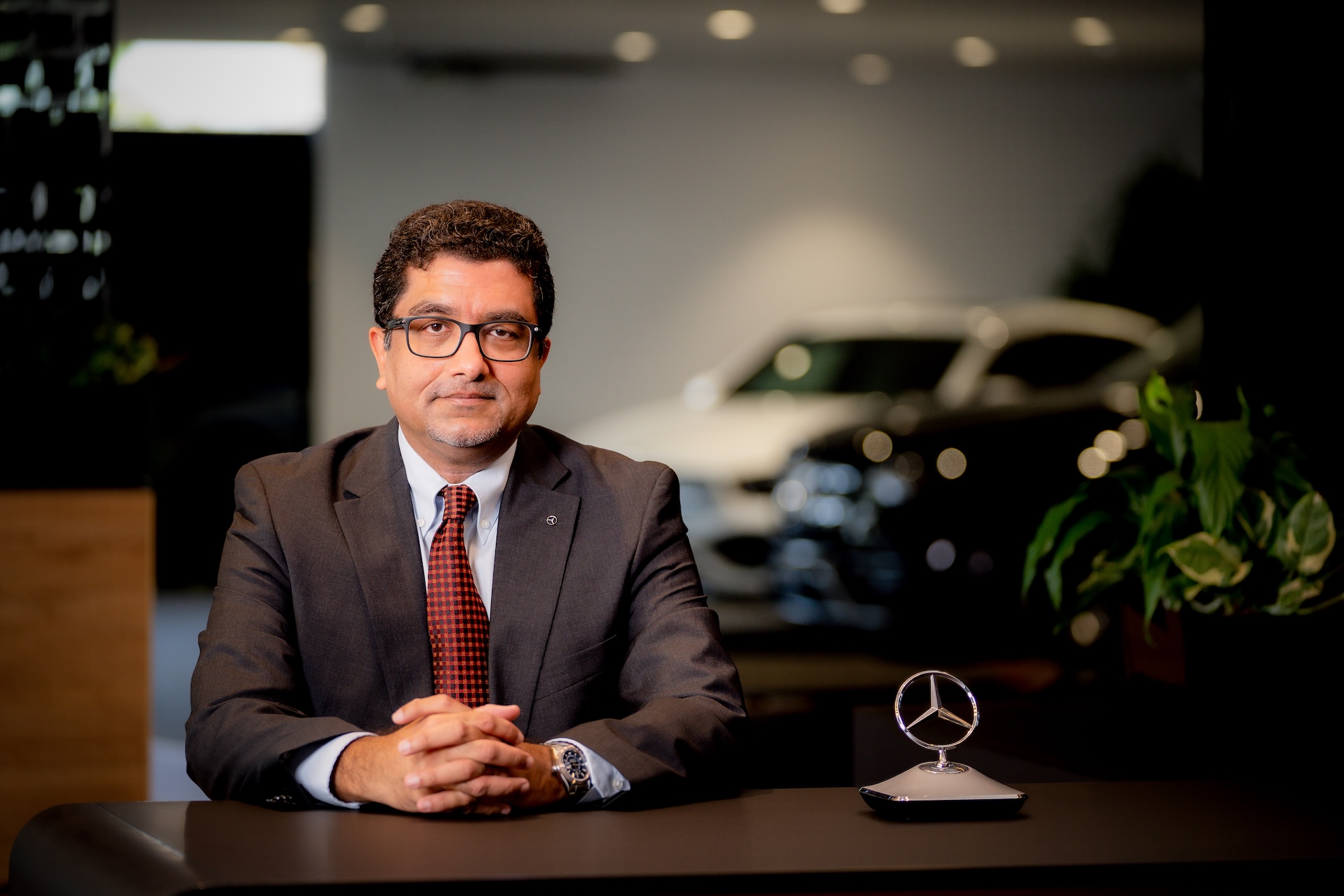
4. JACO has introduced several new business lines, including commercial vehicles through Mercedes-Benz Vans, rental services, and the smart brand. How do these additions strengthen your long-term vision for the company?
With a legacy spanning more than seven decades, Juffali Automotive Company has played a role in shaping the Kingdom’s automotive sector across multiple generations. Throughout that journey, one principle has remained constant: our ability to evolve while staying true to the values that built our reputation; trust, reliability, customer commitment, and long-term thinking.
Our vision has always extended beyond the traditional automotive distribution model. We believe the future belongs to companies that can provide integrated mobility solutions rather than standalone products. The mobility landscape is evolving rapidly, and our responsibility is to ensure that we carry forward the strength of our heritage while continuously adapting to the changing needs of customers, industries, and the Kingdom itself.
The introduction of commercial vehicles through Mercedes-Benz Vans, rental solutions, the smart brand, fleet services, and value-added offerings reflects our commitment to building a diversified mobility ecosystem capable of serving different customer segments and evolving mobility needs.
Beyond expanding our capabilities, these businesses strengthen the resilience of our organization and position JACO to participate more meaningfully in the Kingdom’s next phase of growth. As Vision 2030 continues to reshape how people live, work, travel, and move, we see tremendous opportunities to contribute to new industries, giga-projects, tourism destinations, and emerging mobility ecosystems that are redefining the future of Saudi Arabia.
Ultimately, our objective is not simply to grow our portfolio, but to build on a legacy that spans more than seven decades while creating a future-ready mobility platform that delivers sustainable value for customers, partners, and the Kingdom. We see ourselves not only as participants in Saudi Arabia’s transformation, but as long-term contributors to shaping the future of mobility within it.
5. Sustainability has become a key pillar of your strategy through the “JACO Promise 2030” initiative. What tangible impact do you hope this framework will have on both the company and the wider automotive industry?
Promise 2030 is much more than a sustainability initiative. It is our long-term vision and commitment to aligning JACO’s growth with the Kingdom’s broader transformation agenda.
As a Saudi company with deep roots in the market, we believe our responsibility extends beyond commercial success. We have a role to play in advancing sustainable mobility, investing in Saudi talent, supporting local industries, strengthening environmental practices, and contributing to the long-term resilience of the mobility sector.
What makes Promise 2030 particularly important is that it translates ambition into action. Equally important, it establishes a framework for accountability by linking our long-term ambitions to measurable commitments and outcomes. We have established clear commitments around electric mobility adoption, charging infrastructure support, workforce development, operational sustainability, strategic partnerships, and localization. These are tangible areas where businesses can create measurable impact while contributing to national priorities.
My hope is that Promise 2030 will not only shape the future of JACO but also contribute to a broader conversation about the role companies can play in accelerating sustainable growth. If we can help strengthen the mobility ecosystem, develop future talent, and support the Kingdom’s transition toward a more diversified and sustainable economy, then we will have achieved something far more meaningful than business growth alone.
6. Electric mobility is reshaping consumer expectations globally. How is JACO preparing to meet the growing demand for EVs while supporting Saudi Arabia’s Vision 2030 ambitions?
Electric mobility is no longer a future trend; it is becoming an integral part of the mobility landscape and a key enabler of a more sustainable future. At JACO, our approach goes beyond introducing electric vehicles; we are focused on helping build the ecosystem that will support their long-term adoption across the Kingdom.
Through Promise 2030, we have committed to advancing sustainable mobility by supporting EV awareness, encouraging adoption, contributing to charging infrastructure development, and investing in the capabilities required to support the next generation of mobility solutions. We believe that successful EV adoption depends on more than technology alone; it requires the right infrastructure, consumer confidence, education, and strategic collaboration.
This is why our partnership with EVIQ and Mercedes-Benz Middle East represents such an important milestone. Together, we are contributing to the development of a nationwide high-power charging network that will help accelerate electric mobility adoption across Saudi Arabia. More importantly, this collaboration reflects a shared vision of creating the conditions necessary for a thriving EV ecosystem, one that supports cleaner transportation, economic diversification, and long-term sustainable growth.
What excites me most is that Saudi Arabia is uniquely positioned to become one of the region’s leading electric mobility markets. With Vision 2030 driving investment in infrastructure, clean energy, and innovation, the foundations are being laid for a new era of mobility.
7. Partnerships have played an important role in JACO’s evolution. What qualities do you look for when selecting strategic collaborators, and how do these alliances create value for your customers?
At Juffali Automotive Company, we view partnerships as a catalyst for long-term value creation rather than short-term business opportunities. The most successful collaborations are built on a shared vision, complementary strengths, a commitment to excellence, and a common ambition to create meaningful impact.
When evaluating potential partners, we look beyond commercial objectives. We seek organizations that share our values, understand the importance of customer experience, embrace innovation, and are committed to contributing to the Kingdom’s long-term development. Strong partnerships should not only benefit the companies involved; they should create value for customers, industries, and communities.
This philosophy has guided many of our most important initiatives. Our long-standing partnership with Mercedes-Benz is a testament to what can be achieved when two organizations share a commitment to quality, innovation, and continuous progress. More recently, the collaborations I just mentioned, such as our partnership with EVIQ and Mercedes-Benz Middle East demonstrate how strategic alliances can accelerate the development of entire mobility ecosystems that create value for customers while contributing to the Kingdom’s broader economic and mobility ambitions.
As the mobility landscape continues to evolve, no company can shape the future alone. Partnerships will increasingly become a source of innovation, resilience, and growth. Our objective is to build an ecosystem of trusted collaborators who share our ambition to advance mobility, support national priorities, and deliver greater value across every stage of the journey.
8. Customer experience is increasingly becoming a differentiator in the luxury automotive space. How is JACO redefining the ownership journey beyond the purchase itself?
In the luxury automotive sector, the vehicle may initiate the relationship, but the ownership experience ultimately defines it.
At Juffali Automotive Company, we believe that customer experience extends far beyond the moment of purchase. It encompasses every interaction a customer has with our organization; from digital engagement and showroom visits to aftersales support, mobility services, vehicle care, and long-term ownership solutions.
This philosophy has shaped many of our recent investments. We have strengthened our aftersales process, expanded customer support channels, invested in CRM and digital capabilities, enhanced our service network, and introduced value-added solutions such as ProTech® Monte Carlo. These initiatives are all designed around a single objective: ensuring that customers enjoy a seamless, consistent, and premium experience throughout their ownership journey.
At the same time, customer expectations are evolving. Today’s luxury customer values convenience, personalization, transparency, and meaningful engagement. This is why we continue to invest in technologies and experiences that make every interaction more intuitive, more connected, and more relevant.
Ultimately, we do not measure success by the number of vehicles we sell. We measure it by the strength of the relationships we build and the trust we earn over time. In our view, the ownership journey should be as exceptional as the vehicle itself.
9. Talent development and localization remain central to your leadership approach. How are you empowering Saudi professionals to become the next generation of leaders within the automotive sector?
I firmly believe that the most sustainable investment any organization can make is an investment in people.
Saudi Arabia is undergoing a remarkable transformation that is creating unprecedented opportunities for growth, innovation, and economic diversification. Realizing these ambitions, however, requires a workforce equipped with the skills, expertise, and leadership capabilities needed to drive the future. This is why talent development is not simply an HR initiative at JACO; it is a strategic priority and a core pillar of our Promise 2030 framework.
At the heart of this commitment is the Juffali Training Center, a long-standing institution dedicated to developing Saudi talent and preparing future generations to contribute to the Kingdom’s growth. Working alongside a number of Juffali partners, the center provides specialized technical and vocational education across a range of disciplines, helping young Saudis build the practical skills required to succeed in evolving industries.
One initiative that I am particularly proud of is the Mercedes-Benz Advanced Modern Apprenticeship Program, delivered through the Juffali Training Center and now entering its fifth year. The program reflects our long-term commitment to Saudization, technical excellence, and capability development by creating meaningful career pathways for ambitious young Saudis seeking opportunities within the automotive industry.
What makes this initiative particularly meaningful is that it extends beyond technical training. It represents the transfer of a legacy of more than 140 years of innovation, engineering excellence, and automotive expertise to the next generation of Saudi talent. Supported by Mercedes-Benz specialists and technical training experts, the program helps equip young Saudis with globally aligned capabilities while enabling them to contribute to the future growth of the Kingdom’s automotive and mobility sectors.
At the same time, we continue to invest in leadership development, knowledge transfer, technical training, and career progression opportunities across the organization. Our ambition is not only to develop highly skilled professionals, but to cultivate a sustainable pipeline of the next generation of Saudi leaders who will shape the future of mobility in the Kingdom.
10. Innovation often requires balancing tradition with disruption. How do you preserve the heritage and reputation of a long-established company while embracing emerging technologies and business models?
I do not see heritage and innovation as opposing forces. In fact, I believe the strongest organizations are those that use their heritage as a foundation for future progress.
Juffali Automotive Company has been part of Saudi Arabia’s automotive journey for more than seven decades. Throughout that history, our reputation has been built on trust, reliability, customer commitment, and a willingness to evolve with changing times. These values remain as relevant today as they were when the company was first established.
What changes is how those values are expressed. The needs of customers are evolving, technology is advancing at an unprecedented pace, and entirely new mobility models are emerging. Preserving our heritage therefore does not mean preserving old ways of doing business. It means preserving the principles that define us while continuously adapting how we create value.
This philosophy has guided our investments in digital transformation, electric mobility, new business models, customer experience, and talent development. We are building on decades of trust while preparing the organization for a future shaped by connectivity, sustainability, data, and innovation.
Ultimately, heritage gives us credibility, while innovation gives us relevance. Long-term success requires both. Our responsibility is to ensure that future generations view JACO not only as a company with a proud history, but as one that continuously helped advance the mobility innovation in the Kingdom.
11. Looking beyond electrification, which trends such as artificial intelligence, connected vehicles, autonomous driving, or mobility services—do you believe will have the greatest impact on the future of the automotive industry in Saudi Arabia?
While electrification is an integral part of the industry’s future, I believe the most profound transformation will come from the convergence of several technologies rather than any single innovation.
Artificial intelligence, connected vehicle ecosystems, predictive maintenance, data-driven customer experiences, autonomous technologies, and integrated mobility services are collectively redefining what a vehicle is and how mobility is delivered. Vehicles are evolving from standalone products into intelligent, connected platforms capable of continuously interacting with their environment and users.
For Saudi Arabia, this transformation is particularly exciting because it aligns closely with many of the ambitions driving Vision 2030. Investments in digital infrastructure, advanced logistics, tourism destinations, and future-focused industries are creating an environment where these technologies can scale more rapidly than in many other markets.
I also believe that data and connectivity will become increasingly important competitive differentiators. The ability to deliver personalized services, anticipate customer needs, improve safety, optimize operations, and create seamless mobility experiences will shape the next generation of customer expectations.
At JACO, we view these trends not as distant possibilities, but as opportunities to prepare today for the mobility ecosystem of tomorrow. The future of mobility will be smarter, more connected, more sustainable, and increasingly integrated into everyday life, and we intend to play an active role in helping shape that future.
12. As CEO, what legacy would you like to leave at Juffali Automotive Company, and what message would you share with aspiring business leaders seeking to shape the future of mobility in the Kingdom?
I do not think about legacy as a point at which my contribution ends. My focus today is on ensuring that Juffali Automotive Company continues to evolve, create value, and remain relevant for future generations. Strong institutions are built over decades, and every leader has a responsibility to strengthen them for those who come next.
JACO has been a trusted partner in Saudi Arabia’s mobility journey. Long before I joined the organization, it had already established a remarkable reputation built on trust, excellence, innovation, and a commitment to serving the Kingdom. My responsibility has never been to redefine that legacy, but rather to build upon it and ensure that it continues to evolve, remain relevant, and create value for future generations.
If there is one contribution I would like to make during my time at JACO, it is to help strengthen the company’s position as a future-focused mobility leader, one that successfully combines its heritage with innovation, contributes to national development, invests in people, and continues to set new standards for customer experience, sustainability, and operational excellence.
Equally important is building an organization that can thrive beyond any one individual. Great companies endure because they develop strong cultures, empower future leaders, embrace change, and remain committed to a purpose larger than themselves. If, years from now, JACO is recognized not only for its heritage but also for its ability to continuously innovate, nurture talent, and contribute to Saudi Arabia’s transformation, I would consider that a meaningful achievement.
As for aspiring business leaders, my advice is to think beyond immediate success and focus on long-term value creation. The most effective leaders are not those who simply manage businesses, they are those who build organizations, develop people, create opportunities, and contribute to the advancement of their industries, communities and culture.
Saudi Arabia is experiencing one of the most ambitious transformations in its history. The opportunities ahead are extraordinary, particularly in sectors such as mobility, technology, sustainability, and advanced industries. The next generation of leaders has a unique opportunity not only to participate in this transformation, but to shape it. My advice is to remain ambitious, embrace change, think strategically, and always remember that leadership is ultimately measured not by what you achieve for yourself, but by what you enable others to achieve.